Sugar — Official Team Mascot ⭐ Official Mascot

Sugar Speed Soccer

Science-backed speed training for high-level youth soccer players — covering form, theory, indoor drills, and outdoor workouts. Powered by Sugar.

Form & Theory
🏠 Basement Drills — 15ft × 11ft
🌿 Outdoor Drills
👧 Age 14  |  👦 Age 11
Proposed Weekly Schedule — 20 Minutes a Day

Five focused training days, one game day, one recovery day. Every session includes a warm-up. Rotate through the three drill environments across the week. Tap any item to jump to the drill.

How to use this schedule This is a supplemental programme on top of team training and games — not a replacement. On team practice days, do the FIFA 11+ warm-up as your pre-training routine and skip the additional drill block. Quality always beats quantity: 20 focused minutes beats 60 unfocused minutes.
Saturday
Game Day
Match
FIFA 11+ Pts 1 & 3 only
Skip Part 2 strength work
No extra drills
Stay hydrated
Go win
Sunday
Recovery
Rest
Light walk or swim
Mobility drills (mat) Hip CARs + wipers
Foam roll if available
Sleep 9+ hours

Warm-Up — Hip Mobility & Hamstrings

5–8 minutes, every single session. This warm-up targets the two areas soccer players injure most — the hip complex (including abductors) and hamstrings. Do this before any drill, any game, any time.

Why hips & hamstrings first? Soccer involves constant sprinting, cutting, and kicking — all driven by hip extension and hamstring loading. Cold, stiff hips and hamstrings are the #1 cause of non-contact muscle injuries in youth soccer. A proper dynamic warm-up (not static stretching!) reduces injury risk by up to 50% and immediately improves your first-step speed.
Full Mobility Routine ~6 min
Top 5 Soccer Mobility Drills
Covers wipers, hip CARs (Controlled Articular Rotations), kneeling hip-flexor-to-hamstring stretch, and deep squat with rotation. Each movement done for 1–2 minutes. Start here.
Hip Abduction ↔ 15 yd
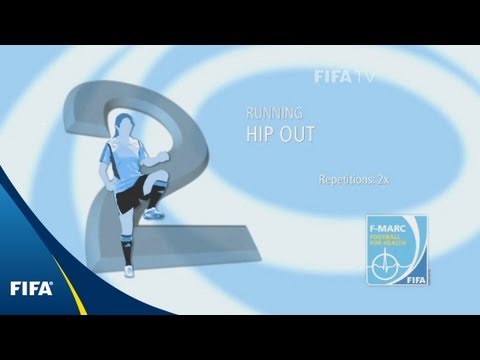
Running Hip Out — Hip Abduction Activation
From FIFA 11+. Lift the knee and rotate the hip outward as you jog down the cones. This activates the gluteus medius (hip abductor) — critical for knee stability and explosive lateral movement.
Hip Internal Rotation ↔ 15 yd
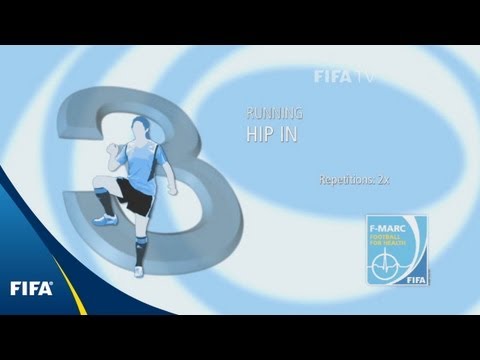
Running Hip In — Hip Rotation Warm-Up
From FIFA 11+. The inward counterpart to Hip Out. Alternating inward hip rotations while jogging warms both sides of the hip capsule and lubricates the joint for sprinting and kicking.
Hamstring Activation 🧘 Mat · Partner
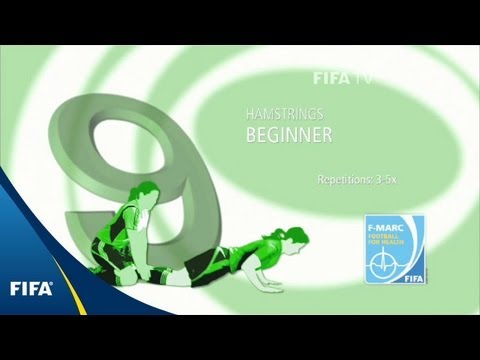
Nordic Hamstring Curl — Beginner
From FIFA 11+. A partner holds your ankles while you lower your body forward slowly. The single most evidence-backed exercise for hamstring injury prevention — studies show it cuts hamstring strain rates in half.
Full Dynamic Routine ~5 min
Dynamic Warm-Up Routine
A complete pre-training activation sequence covering legs, hips, and core. Use this on days you skip the full FIFA 11+ — it hits all the major movement patterns in under 5 minutes.

Running Form & Speed Theory

Before you can run faster, you need to understand how to run faster. Soccer speed is different from track speed — it combines explosive acceleration, quick deceleration, and sharp changes of direction. Start here.

Why Form Matters for Soccer In a typical 90-minute match, outfield players sprint around 40–60 times, covering 1–1.5 km at high intensity. Nearly every sprint is under 15 metres. Winning those short bursts — to the ball, away from a defender, into space — is where proper technique pays off.
Form Overview
Training Soccer Players to Run Faster — Fix Your Form
A former pro breaks down the 5 most common form mistakes soccer players make and how to fix them — covering sprint posture, arm drive, stride distance, strength, and nutrition.
Speed Science
How to Increase Your Running Speed
The fundamental answer to the $1M question — what actually drives speed at the neuromuscular level and how to train it intelligently.
Mechanics Drill 🪢 Elastic Band
Marching A & A-Skip — "Knee Up, Heel Up"
The foundational sprint-mechanics cue in action. Adding resistance makes the muscle memory stick faster. The A-skip pattern directly transfers to faster soccer sprinting.
Form Drill ↔ 10 ft min.
A-Skip
The most important speed drill. Trains triple-flexion (ankle, knee, hip) and glute pull — the two mechanics that separate fast runners from slow ones in every sport.
Form Drill ↔ 10 ft min.
B-Skip
Extends the A-skip with a powerful leg kick-out, teaching the leg-cycling motion you need at maximum speed. Do this after the A-skip feels natural.
Lateral Mechanics ↔ 10 ft min.
Carioca (Grapevine)
Develops the hip flexibility and lateral coordination that let soccer players cut sharply and recover quickly after direction changes — a major differentiator at high level.

40–60

sprints per 90-min match

<15m

most soccer sprints are under 15 metres

2–3×

sessions/week for best speed gains

4–6 wks

to see measurable improvement

Basement Drills — Indoor Turf Room

Drills designed for your 15 ft × 11 ft basement turf space. No long runs needed — these target the explosive first-step and reactive footwork that matter most in soccer.

🏠

Your Basement Turf Room — 15 ft × 11 ft

Small space, big gains. These drills focus on in-place explosiveness, short-space acceleration, and quick feet — all directly transferable to match situations.

Equipment Available Elastic bands  ·  10 lb smash ball  ·  Box (for box jumps)  ·  Yoga / Pilates mats  ·  Cones  ·  Soccer balls  ·  Free weight dumbbells
Acceleration 🧱 Wall
Wall Drill — Acceleration Mechanics
Use the basement wall to isolate the forward lean and knee drive of a sprint start. This is the single best drill for teaching explosive acceleration — no run-up needed.
Explosive Power 🪢 Elastic Band In-Place
Dead Legs — Explosive Knee Drives
Rapid alternating knee drives that train the hip flexors and first-step explosiveness. Add an elastic band around the legs for extra resistance and faster neuromuscular adaptation.
Foot Speed In-Place
Switches — Fast Foot Turnover
Alternating split-jump switches that train the fast-twitch fibres responsible for leg turnover speed. More switches per second = faster stride rate = faster runner.
Footwork & Agility ↔ 12 ft ladder
Agility Ladder Drills for Soccer — All Ages
A 58-second soccer-specific breakdown of ladder drills, both with and without the ball. Your 15 ft room fits a full 10-rung ladder — do these with and without a ball for an extra challenge.
Plyometric Power 📦 Box In-Place
Box Jump — Explosive Hip Power
Your jump box is perfect for this. Box jumps develop the same explosive hip extension used when you push off the ground in a sprint — pure speed-building power.
Unilateral Power ↔ 8 ft min.
Single Leg Hop
Sprinting is a sequence of single-leg movements — train each leg independently! Single leg hops build the stability and explosive power that make every stride stronger and more balanced.
Core & Stability 🪢 Elastic Band In-Place
Bucket Hold — Core Strength Stance
A static hold drill that builds the core and hip stability essential for maintaining sprint form late in a game when fatigue sets in. Use your elastic band for added resistance.
Warm-Up / Activation In-Place
Butt Kicks — Hamstring Activation
A perfect basement warm-up drill. Activates the hamstrings and trains the heel recovery phase of your stride — faster heel recovery = faster leg turnover.

Outdoor Drills — Field, Turf & Pavement

When you have open space, these drills develop full sprint acceleration, top-end speed, and the soccer-specific movements that happen in real match play.

🌿

Open Space — Grass, Turf or Pavement

Bring your cones and soccer balls. Most of these drills need 15–40 yards. Work at full effort with full rest between reps — quality over quantity.

Coach's Note Do outdoor speed work when you're fresh — before a practice session, never at the end. Tired muscles can't fire at full speed, which defeats the purpose and reinforces slow movement patterns.
Acceleration ↔ 10 yd
Starting Position & First Step Explosiveness
In soccer, you never get a perfect start. This drill trains explosive first steps from varied stances — standing, crouching, facing away — to replicate real game situations.
Game-Specific Speed 🪢 Elastic Band ↔ 15–20 yd
Explosive Sprint & Deceleration — Attacking / Defending
Sprint with resistance, then decelerate and change direction sharply — exactly what happens when you press, break away, or track a run. Soccer speed in one drill.
Strength & Power 🪢 Elastic Band ↔ 10 yd
Resisted Kick Drills — Leg Drive & Strength
Combine soccer-specific kicking mechanics with resistance training to build the leg-drive strength behind both explosive sprinting and powerful shooting.
Defensive Speed ↔ 15 yd
Back Pedal to Sprint — Defensive Recovery Speed
One of the most overlooked soccer skills. Back-pedalling into a transition sprint replicates the exact moment a defender has to react and recover — critical for high-level play.
Plyometric ↔ 20–30 yd
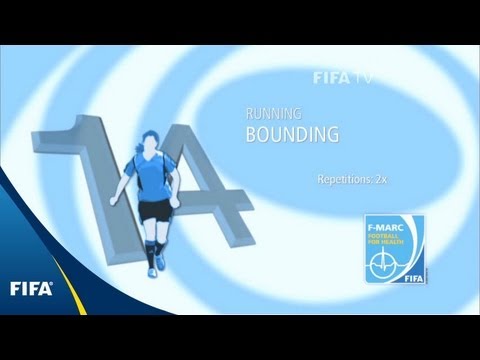
Bounding — Explosive Stride Length
Exaggerated running strides that build horizontal power. Bounding makes every push-off more explosive, directly increasing your stride length without compromising stride rate.
Form Drill ↔ 20 yd
Straight Leg Run — Forward Lean & Foot Strike
Looks unusual, but it's one of the most effective form drills. Teaches optimal forward lean and the correct foot-strike position that puts you in the right posture to accelerate through a sprint.
Agility 🔶 Cones ↔ 20 yd
Zig-Zag Running — Agility & Direction Change
Set your cones 2–3 yards apart in a staggered line. Zig-zag at full pace, staying low and using the outside of your foot to cut. This is as close to game-speed movement as you can get in training.
Soccer-Specific ⚽ Ball ↔ 10 yd grid
The Rondo — Ball Control & Movement at Speed
Used by every elite academy in the world. The rondo develops the rapid decision-making, sharp passing, and explosive movement in tight spaces that define elite soccer players. Play it hard and fast.

FIFA 11+ — ACL & Injury Prevention Programme

Developed by FIFA's medical research centre, the 11+ is a 15-exercise warm-up proven to reduce overall injuries by 30–50% and ACL tears specifically — especially important for female players aged 13–18. Do the full routine twice a week; before matches run Parts 1 & 3 only.

ACL Risk & Female Athletes Female soccer players are 2–8× more likely to suffer an ACL tear than males, due to differences in hip anatomy, muscle activation patterns, and hormonal factors. The FIFA 11+ specifically targets the neuromuscular control deficits that cause these injuries. Consistent twice-weekly practice is the single most effective thing a young female soccer player can do to protect her knees.
▶ Part 1 — Running Warm-Up

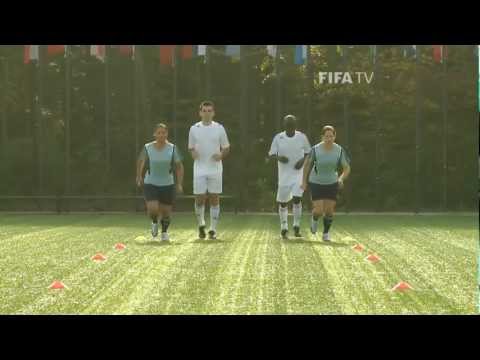
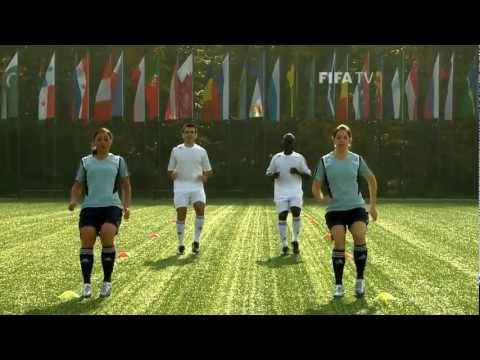
Jog side by side with a partner between two rows of cones set 10 yards apart. Each exercise is performed on the way down and back (≈ 2 min total).

Part 1 · Exercise 1
Running Straight Ahead
Jog straight, then at 75%, then at full pace. Progresses three times on the return — gets blood moving and raises core temperature.
Part 1 · Exercise 2
Running Hip Out (Abduction)
Lift the knee and rotate the hip outward at each cone. Activates the gluteus medius — the key hip abductor that stabilises the knee during landing and cutting.
Part 1 · Exercise 3
Running Hip In (Adduction)
The inward counterpart — activates the adductors and warms the hip capsule through its full range, balancing the external rotation done in Exercise 2.
Part 1 · Exercise 4
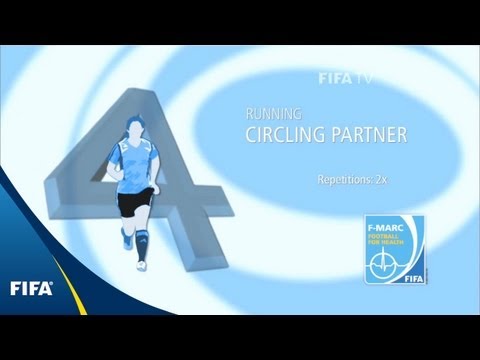
Running — Circling Partner
Partners shuffle sideways 90°, then circle around each other. Trains lateral movement, shoulder awareness, and spatial body control.
Part 1 · Exercise 5
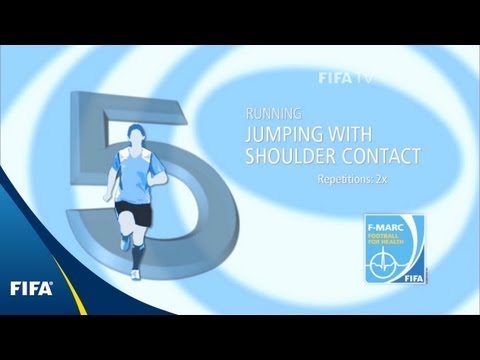
Running — Shoulder Contact
Partners jump sideways to make shoulder contact, landing with bent knees and hips. Trains safe landing mechanics and physical presence in contact situations.
Part 1 · Exercise 6
Running — Quick Forward & Back
Two cones forward, one cone back using quick small steps. Trains deceleration control and the rapid direction-change mechanics used constantly in soccer.
▶ Part 2 — Strength, Balance & Plyometrics

6 exercise types, 3 levels each (Beginner → Intermediate → Advanced). Start at Level 1 and progress over weeks. Use your mat for plank and hamstring exercises.

Part 2 · Core 🧘 Mat
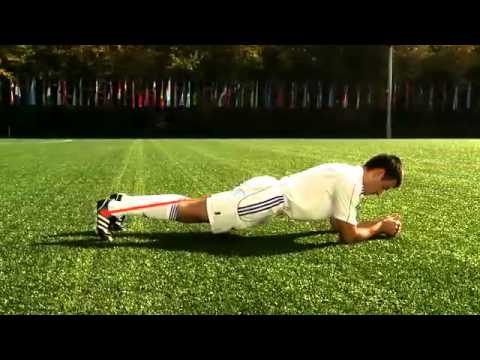
The Bench — Forearm Plank
L1: Hold 20–30 sec. L2: Alternating leg lifts. L3: Single-leg hold. Builds the anterior core stability that keeps your trunk rigid during sprinting and protects the lower back.
Part 2 · Hip Stability 🧘 Mat
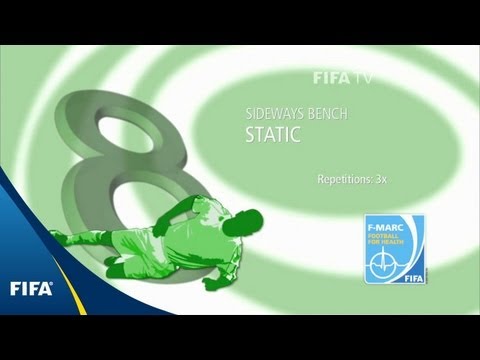
Sideways Bench — Side Plank
L1: Static hold. L2: Hip raise and lower. L3: Side plank with top-leg raise. Strengthens the lateral hip chain — the exact muscles that prevent the knee from collapsing inward (the most common ACL mechanism).
Part 2 · Hamstrings 🧘 Mat · Partner
Nordic Hamstring Curl
L1: 3–4 reps (partner holds ankles, lean forward slowly). L2: 7–8 reps. L3: 10–12 reps. The most evidence-backed exercise for hamstring strain prevention. This is non-negotiable.
Part 2 · Balance ⚽ Ball
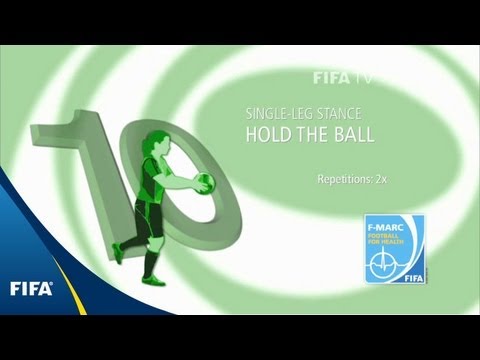
Single-Leg Stance
L1: Hold ball and balance. L2: Partner throws ball back and forth. L3: Partner pushes to challenge balance. Trains the proprioception that prevents ankle sprains and knee-valgus collapse on landing.
Part 2 · Leg Strength
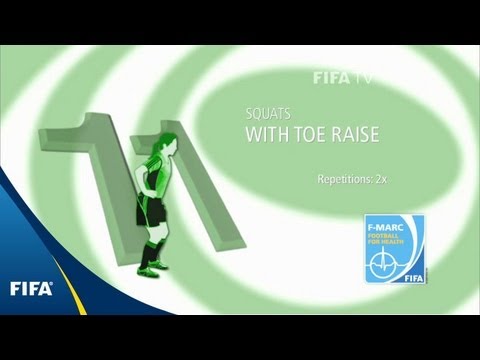
Squats with Toe Raise
L1: Squat + toe raise × 10. L2: Walking lunge × 10. L3: Single-leg squat with partner × 10. Builds quad and glute strength — the muscles that absorb force and protect the ACL on every landing.
Part 2 · Plyometrics
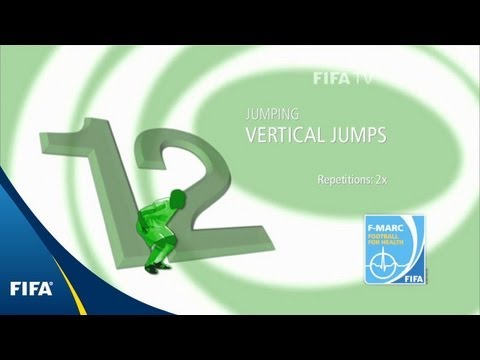
Jumping & Landing
L1: Vertical jumps × 10, land softly. L2: Lateral jumps × 10. L3: Box jumps. Always land with soft knees — never let the knees cave inward. This is the most critical cue in the entire 11+ programme.
▶ Part 3 — Running at Speed

Run at 75–80% pace. These movements bridge strength work back into game-speed mechanics and reinforce the landing patterns practised in Part 2.

Part 3 · Exercise 1
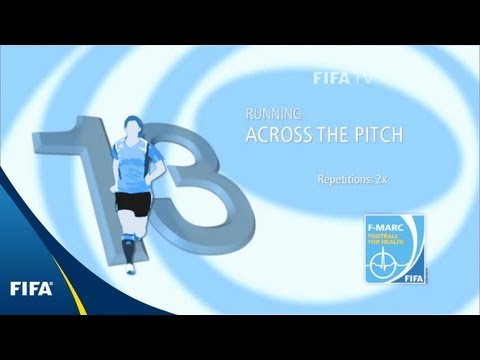
Running Across the Pitch
Side-to-side runs at 75–80% maximum pace. Gets the full-body movement pattern firing at near-game speed to complete the warm-up to sprint transition.
Part 3 · Exercise 2
Running — High-Knee Bounding
Exaggerated strides with big arm swing and high knee lift. Combines the strength from Part 2 with running mechanics — bridging the gap between warm-up and full-speed play.
Part 3 · Exercise 3
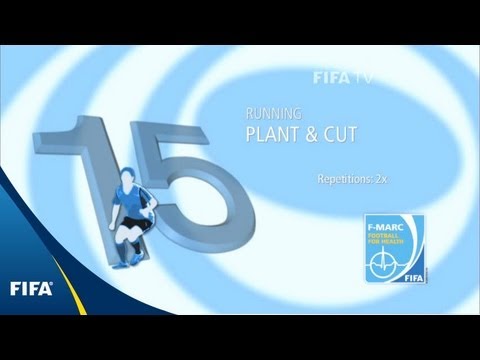
Running — Plant & Cut
Sprint, plant, and cut sharply at each cone. This is the exact movement that causes ACL tears when performed cold — doing it here at 75% while warm builds the safe neuromuscular pattern for doing it at 100% in a game.

Meet Sugar — Official Mascot of Sugar Speed Soccer

Every great team has a mascot. Sugar brings the energy, the heart, and the reminder that after every hard training session, you deserve a rest on the couch.

Sugar in the snow at sunset

Scouting the Training Ground

Sugar surveys the field at golden hour, calculating the perfect sprint lane. Ice conditions noted.

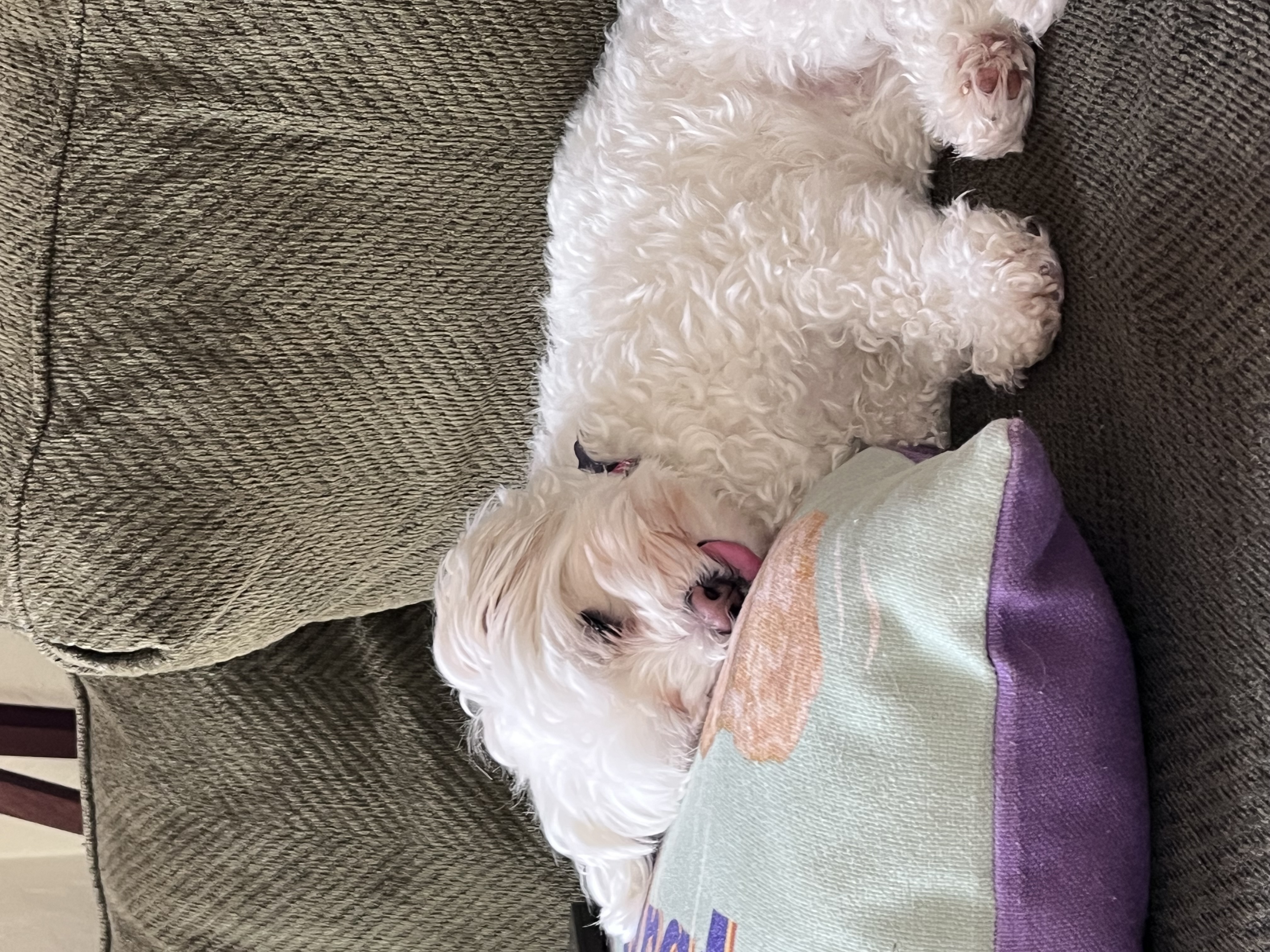
Sugar relaxing on the couch

Post-Training Recovery Protocol

Active recovery is overrated. Sugar's preferred method: full horizontal couch deployment. Works every time.

Sugar peeking between cushions

Studying the Opposition

Reading the game from a hidden vantage point. Sugar's defensive positioning is unmatched.

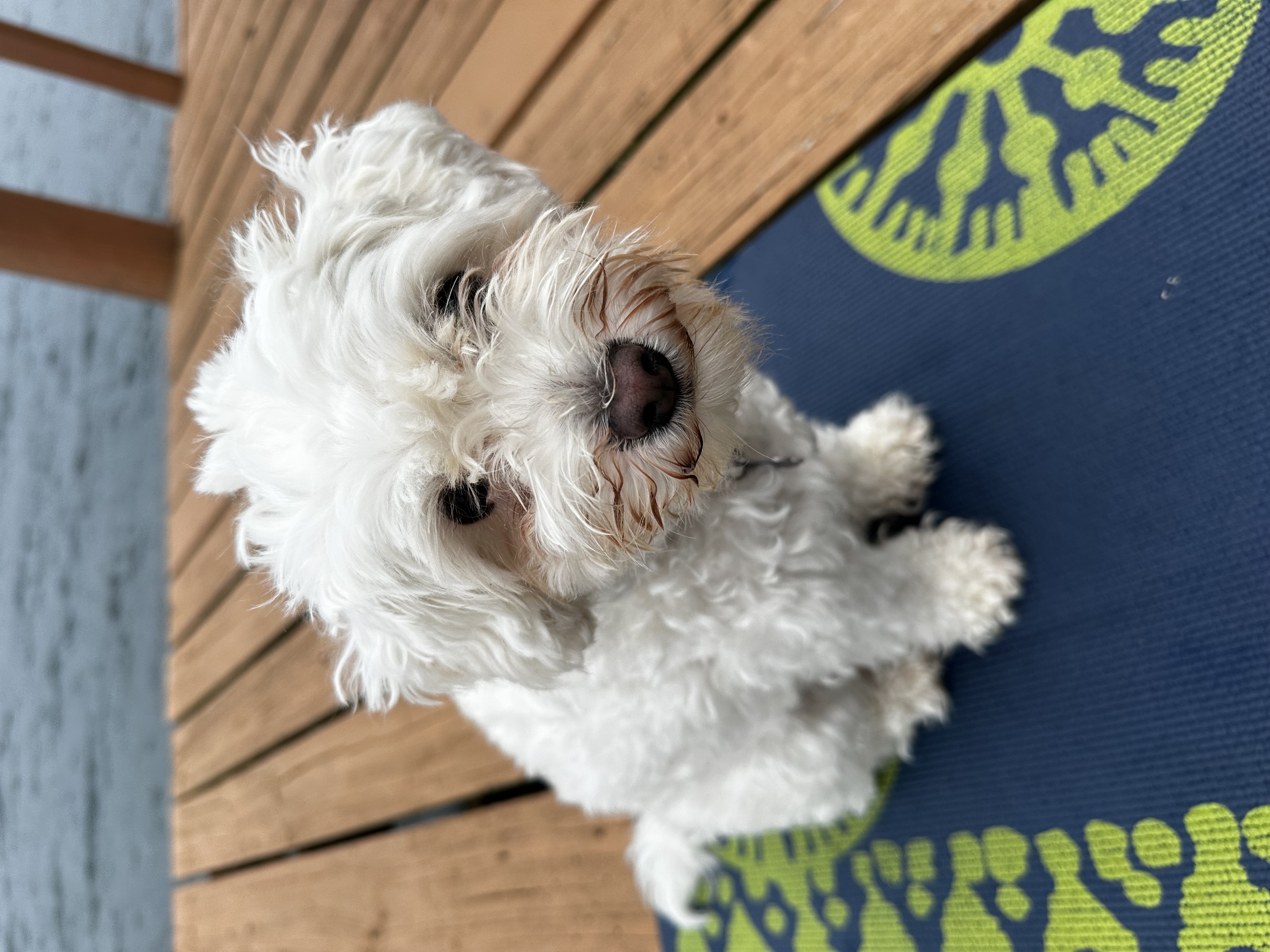
Sugar on the deck by the yoga mat

Ready for Mat Work

Already on the mat before anyone else. Sugar takes warm-ups very seriously. The yoga mat belongs to Sugar now.